

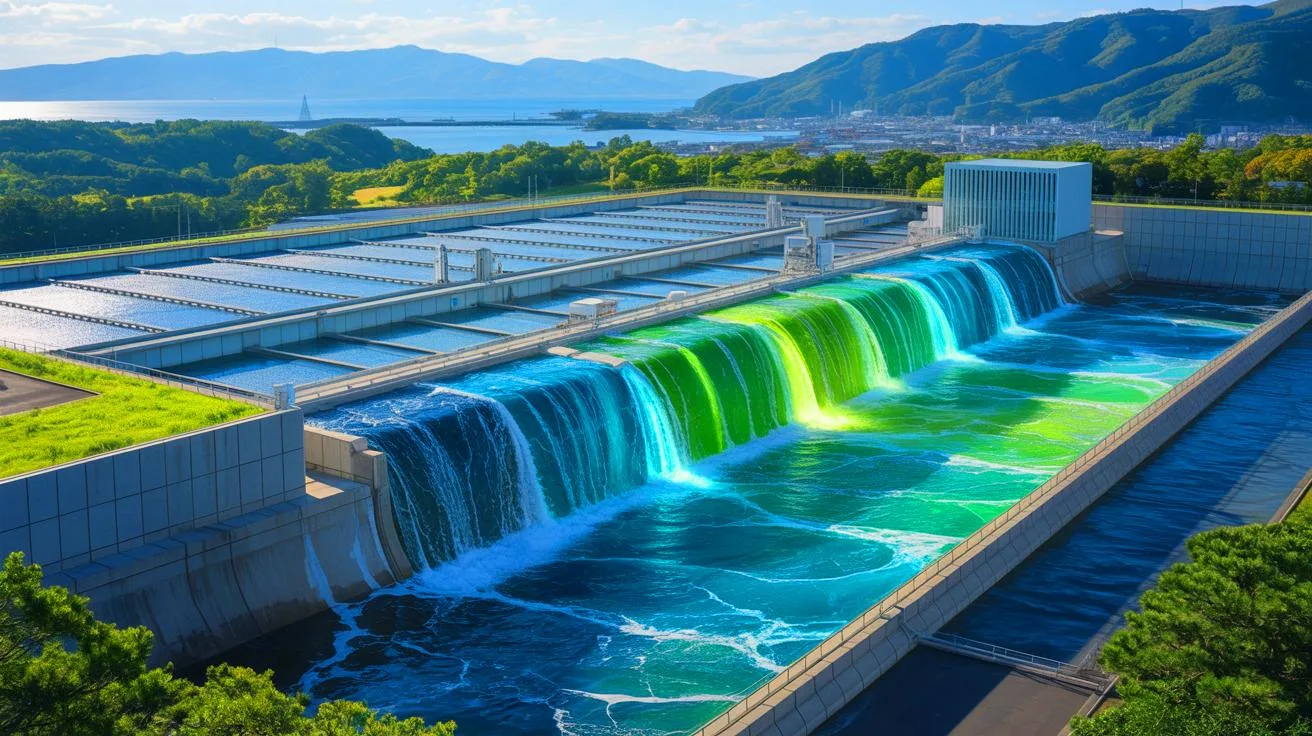
A groundbreaking facility in Fukuoka, Japan, is harnessing the power of osmotic energy by combining fresh and salt water to generate continuous, renewable electricity, potentially revolutionizing the global energy landscape.
Generating electricity from the mixing of fresh and salt water may sound like science fiction, but osmotic energy is proving to be a viable renewable energy source. This innovative technology harnesses the natural process of osmosis, where water molecules move across a membrane to balance salinity differences. Unlike solar or wind, osmotic energy offers continuous power generation without reliance on weather conditions or daylight. Recent developments in Japan and Denmark highlight the growing interest and potential of this energy source, as it begins to find its place within real-world infrastructure.
The Science Behind Osmotic Energy
Osmotic energy capitalizes on the basic principle of osmosis. When fresh and salt water are separated by a semi-permeable membrane, water molecules naturally flow through to equalize salinity levels. This movement creates pressure that can drive turbines to generate electricity. The concept is simple: no combustion, no emissions, and continuous operation. Unlike wind or solar energy, osmotic power does not depend on external conditions, making it a potentially reliable energy source.
The initial exploration of this technology began years ago, with the first significant push occurring in 2009. The Norwegian company Statkraft constructed one of the earliest prototype osmotic power plants. Although it successfully demonstrated the concept, challenges like high costs and technological limitations stalled widespread adoption. However, recent advancements in Japan and Denmark suggest a renewed interest in overcoming these barriers.
Japan Takes the Lead with New Facility
In Fukuoka, Japan, a new osmotic power facility has been built by a consortium including the National Institute for Materials Science. This plant represents a significant step forward in the application of osmotic technology. By integrating with a desalination plant, the facility uses concentrated brine waste to enhance the salinity gradient, improving efficiency. This innovative approach not only generates around 880,000 kilowatt-hours annually but also utilizes waste products that would otherwise be discarded.
The Fukuoka plant is the second full-scale facility designed for continuous output, following Denmark’s recent launch. Though modest in scale, it demonstrates how osmotic power can be integrated into existing systems.
This integration is crucial for reducing costs and improving the viability of the technology. By utilizing concentrated brine, the plant circumvents some of the natural limitations of river-based systems, offering a more efficient and sustainable model.
Read full article on energy-reporters.com >